
How to Choose the Best Paper Cylinders for Your Business

Choosing the right Paper Cylinders can influence product protection, packing speed, storage space, and customer perception. A suitable cylinder should match your material, filling process, shipping conditions, and brand presentation. Cardboard thickness matters, but it is not the only concern. Diameter, wall strength, lid fit, moisture resistance, and inner lining can change performance significantly.

Start with the product inside. Dry powders may need a secure barrier, while delicate goods require stronger walls and better cushioning. Measure the product carefully, including its height and volume. A loose fit can cause movement during transport. A tight fit may slow filling and damage the package. Test samples under realistic conditions, such as warehouse stacking, vibration, temperature changes, and repeated opening.

Small details matter.

From practical packaging evaluations, suppliers should provide material specifications, customization limits, and quality-control information. Ask whether the paper source is responsibly managed and whether coatings suit your intended use. Food-related applications need appropriate, documented packaging compliance. Do not rely only on attractive samples. Confirm batch consistency, print quality, seam strength, and delivery reliability before placing a large order.

A strong design may still fail.

Cost should include tooling, freight, rejected units, storage, and assembly labor. That broader calculation often changes the cheapest option. It is also wise to compare two or three suppliers using the same testing standards. No cylinder is perfect for every business. Your first choice may need adjustment after real-world testing, and recognizing that early can prevent expensive mistakes.
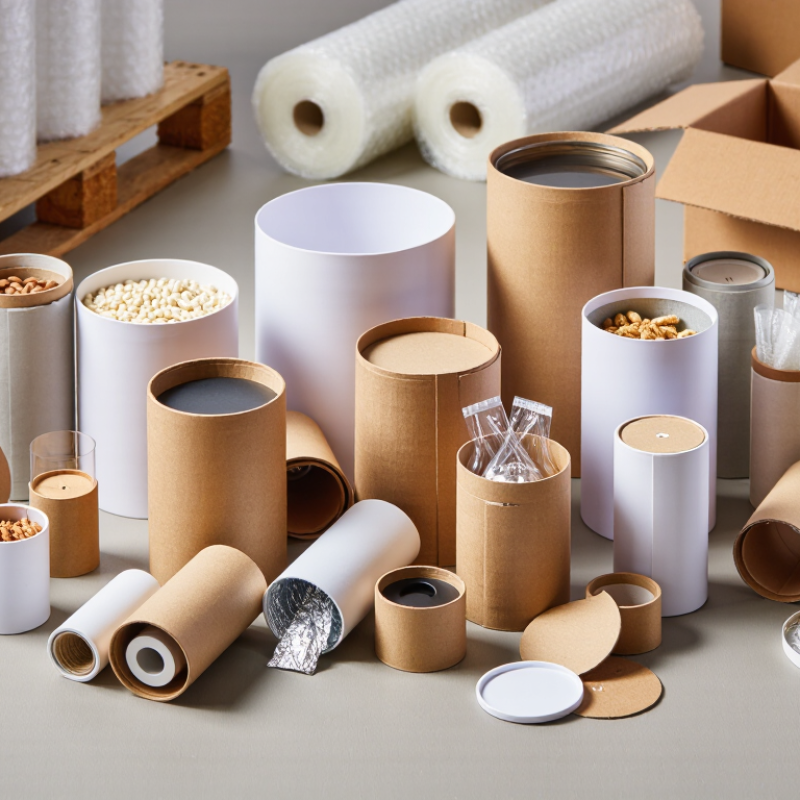
How to Choose the Best Paper Cylinders for Your Business

Understanding Paper Cylinder Types and Their Business Applications

Paper cylinders differ by winding method, wall construction, and intended load. Spiral-wound tubes use layered paper wrapped at an angle. They suit mailing tubes, packaging sleeves, and lightweight industrial cores. Convolute-wound cylinders use parallel paper layers, creating smoother walls and stronger compression resistance. They are useful for textile rolls, films, labels, and other materials requiring stable winding.

Composite paper cans add a paper body with suitable end closures. Food, cosmetics, and household products often use this format. However, product contact requires careful material selection and documented compliance. Moisture, oil, temperature, and filling pressure can change performance. A cylinder designed for dry goods may soften in a humid warehouse. That detail is easy to miss.

Choosing the right type starts with the application, not appearance. Measure the inner diameter, wall thickness, length, and expected weight. Then check stacking pressure and winding tension. In practical testing, filled samples should remain stable after transport simulation and short-term storage. Compression tests reveal weaknesses that a visual inspection cannot. The cheapest option can look sensible. It often is not. I would also question overly precise specifications when the operating conditions are uncertain. A thicker wall may improve strength, yet it can increase material use and shipping weight. Suppliers should provide technical data, production tolerances, and test methods. Clear records make future purchasing decisions more reliable.

Assessing Material Quality, Strength, and Size Requirements

Choosing paper cylinders starts with material quality, not appearance. Examine the paper grade, fiber consistency, moisture level, and adhesive bond. Dense kraft layers usually provide better stability than loosely wound sheets. Recycled fibers can perform well, but their quality may vary between batches. Ask for test data, then inspect a sample under normal warehouse conditions. A clean edge and even winding matter more than a glossy surface.

Strength should match the cylinder’s real workload. Check compression resistance when cylinders are stacked, transported, or fitted with heavy contents. Wall thickness helps, but extra layers do not always solve weak bonding. Test several samples for crushing, splitting, and edge deformation. I once focused only on vertical strength and missed side pressure during loading. That mistake showed why practical handling tests are essential. Small details matter.

Size requirements deserve equal attention. Measure the inner diameter, outer diameter, length, and acceptable tolerance before ordering. A slight mismatch can cause loose fitting, damaged materials, or slower packing. Consider how machinery grips the cylinder, especially at high speed. Leave enough clearance for smooth insertion, but avoid unnecessary movement. Record dimensions from multiple samples, not just one. Paper responds to humidity, and dimensions may shift slightly. This is easy to overlook. Reliable suppliers should explain their testing methods, material specifications, and quality controls clearly.

Comparing Customization, Sustainability, and Production Features

How to Choose the Best Paper Cylinders for Your Business

Customization should begin with the product, not the artwork. Measure diameter, height, wall thickness, and filling temperature before requesting samples. A narrow cylinder suits cosmetics and small dry goods. A wider wall offers better compression resistance for heavier contents. Print coverage, lid style, and inner barriers also affect costs. Smithers’ paper-based packaging forecasts identify design flexibility as a major growth driver through 2028. Yet attractive printing cannot repair a weak closure.

Sustainability needs evidence. FAO reported approximately 415 million tonnes of global paper and paperboard production in 2022. That scale makes fiber sourcing and recovery important decisions. Ask whether the cylinder uses recycled content, responsibly sourced virgin fiber, or both. Request supplier documentation, not broad environmental claims. CEPI reported a European paper recycling rate of about 79% in 2023, but local collection systems still vary. A recyclable tube may fail in practice if its coating or metal component disrupts sorting.

Small details matter. Production features deserve equal attention. Check winding consistency, moisture control, dimensional tolerances, and minimum order quantities. Faster output is not always better. I would test one filled batch, then inspect crushed edges, lid fit, print scuffing, and storage behavior. Some assumptions will be wrong. That is useful evidence before committing to full production.

Evaluating Suppliers, Pricing, and Minimum Order Quantities

How to Choose the Best Paper Cylinders for Your Business

Choosing the best paper cylinders starts with supplier evidence, not attractive photographs. Request samples matching your planned diameter, wall thickness, liner, and closure. Measure roundness, seam strength, and fit after stacking. Ask how the supplier controls moisture and batch consistency. A reliable supplier should provide clear specifications, quality records, production photos, and realistic lead times. Speak with the quality manager, not only a salesperson. Small details reveal more than polished promises. Still, no supplier is flawless; one approved sample cannot predict every production run.

Compare total landed cost, not unit price alone. Include tooling, artwork setup, freight, inspection, storage, and possible rejected units. A lower quote may hide expensive minimum order quantities. Ask for pricing at three volumes, such as 500, 2,000, and 10,000 pieces. Calculate the cost per usable cylinder. Clarify whether MOQ applies per size, color, or printed design. For a new product, excessive inventory can damage cash flow. Yet a tiny order may create higher setup charges and inconsistent scheduling. The right balance depends on sales forecasts and available storage.

Tips: Begin with a pilot order. Put tolerances in writing. Check ten random pieces. Record dents, odor, edge damage, and closure fit. Request a replacement policy before payment. I would also ask what happens when demand changes suddenly. That question is easy to forget, and it can expose weak planning.

Selecting Paper Cylinders Based on Performance and Long-Term Value

How to Choose the Best Paper Cylinders for Your Business

Selecting paper cylinders should begin with performance, not appearance. A strong cylinder must resist crushing, moisture, stacking pressure, and repeated handling. Check wall thickness, winding quality, compression strength, and seam consistency. A tube that looks rigid may still deform during warehouse storage. Test filled samples on a pallet for at least several days. Real conditions reveal more than a catalog.

Long-term value also depends on material efficiency and end-of-life options. FAO data recorded more than 400 million tonnes of global paper and paperboard production in 2022. That scale makes fiber sourcing and waste reduction important purchasing factors. CEPI reported a European paper recycling rate of about 79% in its 2023 statistics. However, coatings, metal closures, and heavy adhesives can reduce recyclability. This detail is easy to overlook. Ask suppliers for recycled-content percentages, fiber certifications, moisture test results, and batch inspection records. Specifications should be written, not assumed.

Tips: Compare total cost per protected unit, not the lowest tube price. Request samples with your actual product weight. Measure dents after transport simulation. Review supplier data twice; mistakes happen. A lighter cylinder may save material, yet fail under stacking pressure. In my experience, the best choice is rarely the most attractive one. It is the one that performs consistently, wastes less, and remains practical when conditions change.

Shopping cart