China Best Oil Filling Machine How to Choose?

Choosing the best China Oil Filling Machine requires more than comparing prices, photos, and advertised speed. It requires evidence.

Industry reports show why this decision matters. Grand View Research identifies automation, hygiene, and flexible packaging as major forces shaping the filling equipment market. PMMI’s packaging industry research also highlights labor shortages, production efficiency, and quick changeovers as continuing investment priorities. These findings are practical for edible oil producers. A machine may fill 2,000 bottles per hour, yet poor accuracy can waste oil across every production shift.

The right model should match oil viscosity, bottle shape, cap type, and factory conditions. For example, thick sesame oil may need heated pipelines or a stronger piston system. Lightweight PET bottles may require careful nozzle control. Stainless steel 304 is common, while stainless steel 316 can offer better resistance in demanding environments. Ask for test videos using your actual oil and containers. Request filling accuracy records, cleaning procedures, electrical standards, and spare-parts availability.

Do not trust speed alone.

A reliable supplier should explain how accuracy is measured, not only display a large number. Technical support, installation guidance, and operator training also affect long-term value. ISO 9001 certification can support quality management, but it does not guarantee every machine performs perfectly. That distinction matters. Some buyers, including experienced ones, focus too heavily on the equipment body and overlook pumps, sensors, and software.

This guide examines how to evaluate China’s best Oil Filling Machine options through measurable performance, compliance, maintenance, and supplier credibility. The final choice should fit your product, not merely your budget. Industry data helps, but factory testing remains decisive.
China Best Oil Filling Machine How to Choose?

What Is an Oil Filling Machine and Where Is It Used?

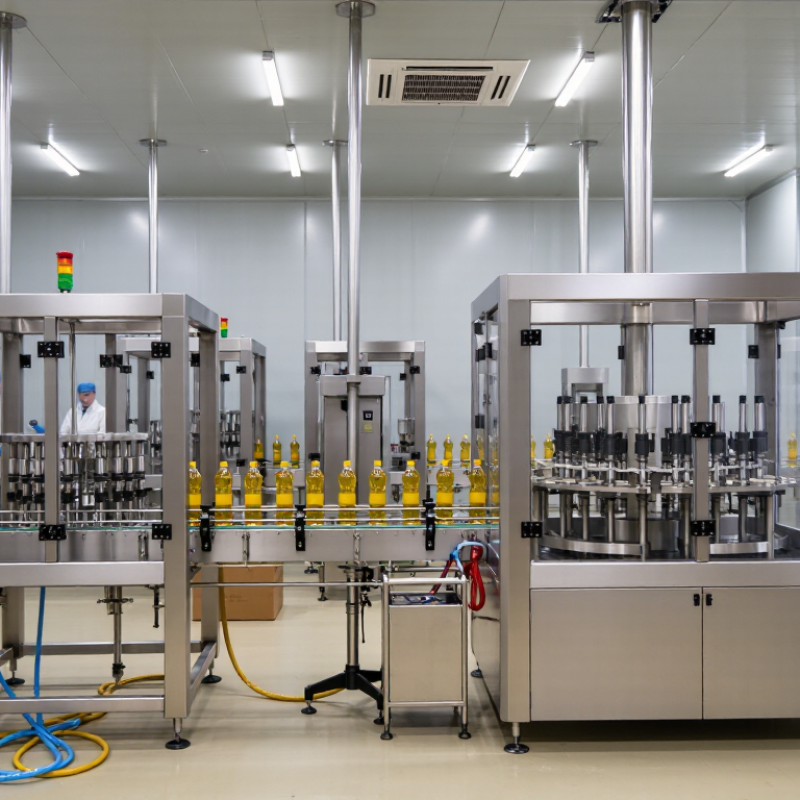
An oil filling machine measures and dispenses liquid oil into bottles, cans, pouches, or drums. It controls volume, speed, and filling accuracy. Common systems include piston fillers, gear-pump fillers, flowmeter fillers, and gravity fillers. Each design suits different viscosity levels.

Edible oil plants use these machines for cooking oil, olive oil, and blended oils. Lubricant factories fill engine oil, hydraulic fluid, and industrial greases. Cosmetic producers handle hair oil, massage oil, and other viscous liquids. Pharmaceutical facilities may fill approved oil-based formulations under controlled conditions. The USDA Foreign Agricultural Service’s Oilseeds: World Markets and Trade report estimates global vegetable oil production at approximately 228 million metric tons in 2024/25. This scale supports steady demand for accurate filling equipment.

Bottle shape matters. So does temperature. Cooler oil flows slowly and may increase filling errors. Foaming products need gentler filling speeds and suitable nozzles. PMMI’s 2024 packaging machinery industry report identifies automation and labor efficiency as continuing investment drivers. In practice, choosing only by advertised speed is risky. A faster machine may create splashing, dripping, or unstable weights. Operators should test the real oil, container, and closure before purchase. That step is often skipped. Mistakes happen there. Cleaning access, food-contact materials, calibration records, and changeover time also deserve careful review.
Which Oil Filling Machine Type Fits Your Product?

Choosing the best oil filling machine in China starts with your product, not the machine’s appearance. Cooking oil, engine oil, essential oil, and thick lubricants behave differently during filling. A gravity filler may suit thin oils with steady flow. A piston filler handles thicker oils and offers consistent volume. Gear pump systems can work well for viscous products, while peristaltic fillers reduce product contact and simplify cleaning.

Check your bottle size, filling range, daily output, and required accuracy. A narrow-neck bottle may need a slower nozzle and anti-drip control. Foaming oil needs gentle filling from the bottom or adjustable speed. In real production, viscosity changes with temperature. This detail is easy to miss. I have seen a machine perform well during testing, then lose accuracy in a colder workshop. Ask for trials using your actual oil and containers.

Tips: Measure viscosity at different temperatures. Confirm nozzle material and sealing quality. Request cleaning and calibration instructions. Test the smallest and largest bottle sizes before ordering. Leave room for future production growth, but do not buy excessive capacity without a clear plan. A smaller machine can be easier to operate and maintain. It may also become a limitation later. That trade-off deserves honest review.

How to Match Filling Accuracy, Speed, and Container Requirements

China Best Oil Filling Machine: How to Choose?

Choosing an oil filling machine starts with the product, not the advertised speed. In practical trials, light cooking oil may run smoothly through a gravity system, while thicker oil needs piston or gear pumping. Filling accuracy also changes with temperature, viscosity, and liquid level. A 500 ml bottle may require different settings from a five-liter container. Measure the actual tolerance you can accept, then request test samples using your oil and containers. A machine rated at 2,000 bottles per hour may deliver less in real production. Changeovers, cleaning, and operator adjustments consume time.

Tips: Check the filling range, nozzle design, pump type, and control method. Watch for dripping after each fill. Inspect bottle necks and caps for size variation. Ask for calibration records and a clear testing procedure. If possible, observe a continuous trial, not only a short demonstration.

Speed should match your downstream equipment. A fast filler creates delays when the capper or conveyor cannot keep pace. For narrow bottles, spacing accuracy matters as much as pump speed. For wide containers, nozzle movement and splash control become more important. I once focused too heavily on accuracy and underestimated cleaning time; the purchase looked correct on paper, but daily operation became inefficient. That experience shows why factory layout, staffing, and maintenance access deserve equal attention. Reliable suppliers should explain limitations, provide operating data, and support repeatable testing before delivery.

China Best Oil Filling Machine: How to Choose and Match Filling Accuracy, Speed, and Container Requirements
Machine Type Suitable Oil Products Typical Fill Volume Range Typical Filling Accuracy Typical Output Range Suitable Container Types Recommended Container Size Best Application Key Selection Considerations
Time-Gravity Filler Low- to medium-viscosity edible oils, lubricants, and cleaning oils 50 mL–5 L Approximately ±1% to ±2% About 10–30 containers per minute Rigid PET, HDPE, glass, and metal containers Small and medium bottles Entry-level and budget-conscious production lines Requires stable product viscosity and a consistent liquid level in the supply tank
Piston Filler Cooking oil, motor oil, gear oil, hydraulic oil, and other medium- to high-viscosity liquids 50 mL–20 L Approximately ±0.5% to ±1% About 10–40 containers per minute PET, HDPE, PP, glass, metal cans, and jerry cans 100 mL–20 L Accurate filling of viscous or semi-viscous oils Choose piston diameter and cylinder volume according to the target fill range; product contact parts should match the oil and cleaning process
Gear Pump Filler Lubricating oil, engine oil, gear oil, hydraulic oil, and other stable-viscosity products 100 mL–25 L Approximately ±0.5% to ±1% About 10–50 containers per minute Plastic bottles, metal cans, pails, and jerry cans 250 mL–25 L Flexible filling of oils with different viscosities Pump speed must be adjusted to product viscosity; avoid excessive shear or heat for sensitive formulations
Mass-Flow Filler Edible oils, specialty oils, and products requiring weight-based control 100 mL–20 L Approximately ±0.2% to ±0.5% About 10–60 containers per minute PET, HDPE, glass, metal, and other rigid containers 250 mL–20 L High-accuracy filling where product density may vary Provides mass-based control and reduces the effect of temperature-related density changes; usually has a higher initial cost
Net-Weight Filler Bulk lubricants, edible oils, industrial oils, and high-value oil products 1 L–30 L Approximately ±0.2% to ±0.5% About 6–30 containers per minute Large bottles, jerry cans, pails, drums, and intermediate containers 1 L–30 L Large-volume filling with controlled product giveaway Requires a stable weighing platform and suitable load cells; container handling must be steady during weighing
Overflow Filler Low-viscosity oils and products where a uniform visible fill level is important 100 mL–5 L Approximately ±0.5% to ±1% About 15–80 containers per minute Rigid transparent or semi-transparent PET and glass bottles 100 mL–5 L Retail packaging with consistent liquid appearance Works best with uniform bottle dimensions and relatively low-viscosity products; not ideal for highly viscous oils
Auger Filler Oil powders, powdered additives, and dry blended ingredients used in oil-related products 5 g–5 kg Approximately ±1% to ±2% About 10–60 containers per minute Jars, bags, bottles, and cans Small packs to medium containers Dry ingredients rather than liquid oil filling Use only when the material is powder or granule; moisture, particle size, and bulk density affect accuracy
Selection note: Actual accuracy and speed depend on oil viscosity, temperature, foaming behavior, container shape, filling volume, nozzle quantity, operator settings, and the required changeover frequency. Confirm performance with product and container samples before final equipment selection.

What Quality and Safety Features Should You Evaluate?

Choosing the best oil filling machine requires more than checking speed and price. Quality begins with product-contact materials, such as food-grade stainless steel and durable, non-reactive seals. The filling nozzle should deliver consistent volumes without dripping. A clean drip tray matters. Small leaks can contaminate surfaces and waste oil.

Safety features deserve equal attention. Look for guarded moving parts, an emergency stop button, overload protection, and sensors that detect missing containers. Controls should be easy to understand, even during a busy production shift. Ask for calibration records, factory testing results, and clear maintenance instructions. A machine without traceable documentation may still look impressive, but appearance can mislead. Confirm that the equipment follows applicable machinery and food-contact requirements in your market.

Tips: Test the machine with your actual oil, bottle shape, and target fill volume. Check accuracy after several hours, not only during a short demonstration. Inspect seals, valves, and electrical connections before purchase. Keep spare wearing parts available. Also, question cleaning access. Operators often discover awkward corners too late. I would not ignore noise, vibration, or inconsistent filling; these signs may indicate future reliability problems. A practical evaluation should include operator training, sanitation procedures, and after-sales technical support. Even a strong specification can fail when daily maintenance is unclear.

China Best Oil Filling Machine: How to Choose?

Quality and safety evaluation priorities for selecting an oil filling machine

How to evaluate the machine:

Prioritize repeatable filling accuracy, hygienic product-contact construction, effective guarding and emergency-stop functions, material compatibility with the oil, easy cleaning, and complete technical documentation. Verify that product-contact parts are suitable for the oil and cleaning chemicals, and check applicable requirements such as IEC 60204-1 for electrical equipment, IEC 60529 for enclosure protection, and ISO 13850 for emergency-stop design. The percentages shown are a practical procurement weighting and should be adjusted to the product, container, and production environment.

How to Choose a Reliable Oil Filling Machine Manufacturer in China?

Choosing a reliable oil filling machine manufacturer in China requires more than comparing prices. In real procurement, the cheapest quotation can hide weak pumps, unstable sensors, or limited technical support. Ask how long the manufacturer has produced oil filling equipment. Request videos of complete factory tests, not only polished product photos. A trustworthy supplier should explain filling accuracy under different viscosities, temperatures, and bottle shapes.

Review the machine’s contact parts carefully. Stainless steel grade, seal material, and cleaning access matter for edible or cosmetic oils. Ask for measured accuracy, speed at your target volume, and acceptable product loss. The supplier should provide wiring diagrams, operating manuals, spare-parts lists, and calibration procedures. Insist on a factory acceptance test using bottles and oil similar to your production line. Small details matter. A ten-minute demonstration proves little. Ask for proof.

Check whether engineers can support installation, operator training, and troubleshooting across time zones. Speak with recent customers and ask about response times after delivery. Verify business registration, quality records, export experience, and compliance documents required in your market. Clear contracts should define materials, warranty coverage, replacement parts, and delivery milestones. I would also test sample bottles before signing. My own checklist is never perfect. I once focused heavily on speed and overlooked cleaning time. That mistake increased daily labor. A reliable manufacturer welcomes difficult questions and records every agreed specification.

Shopping cart