7 Tips for Choosing the Best Shrink Tunnel Machine

Choosing the right Shrink Tunnel Machine is more than comparing prices, tunnel length, or heating power. It is a production decision that affects package appearance, energy use, operator safety, and daily output. A machine that performs well during a short demonstration may struggle with thin film, uneven cartons, or continuous production.

Packaging engineer Daniel Mercer explains, “The best shrink tunnel is the one that matches the product, film, and working rhythm of the line.” That principle deserves attention. Before selecting equipment, measure the largest package, smallest package, film type, conveyor speed, and expected hourly volume. Watch how the machine handles corners, labels, and crowded product arrangements. Small details matter. A loose seal can waste material and damage presentation.

This guide, “7 Tips for Choosing the Best Shrink Tunnel Machine,” examines the practical questions buyers sometimes overlook. It considers temperature control, airflow design, conveyor construction, electrical efficiency, maintenance access, and compatibility with existing equipment. It also discusses after-sales support, because a clever machine becomes a poor investment when spare parts are difficult to obtain.

Do not trust impressive specifications alone. Test real products.

A useful evaluation should include several package sizes and a normal production run. Record heating time, film consistency, noise, and operator effort. The first choice may not be perfect. That is acceptable. Careful comparison often reveals weaknesses before installation, when changes are still affordable and manageable.
7 Tips for Choosing the Best Shrink Tunnel Machine

Understanding Shrink Tunnel Machines and Their Main Applications

7 Tips for Choosing the Best Shrink Tunnel Machine

Understanding Shrink Tunnel Machines and Their Main Applications

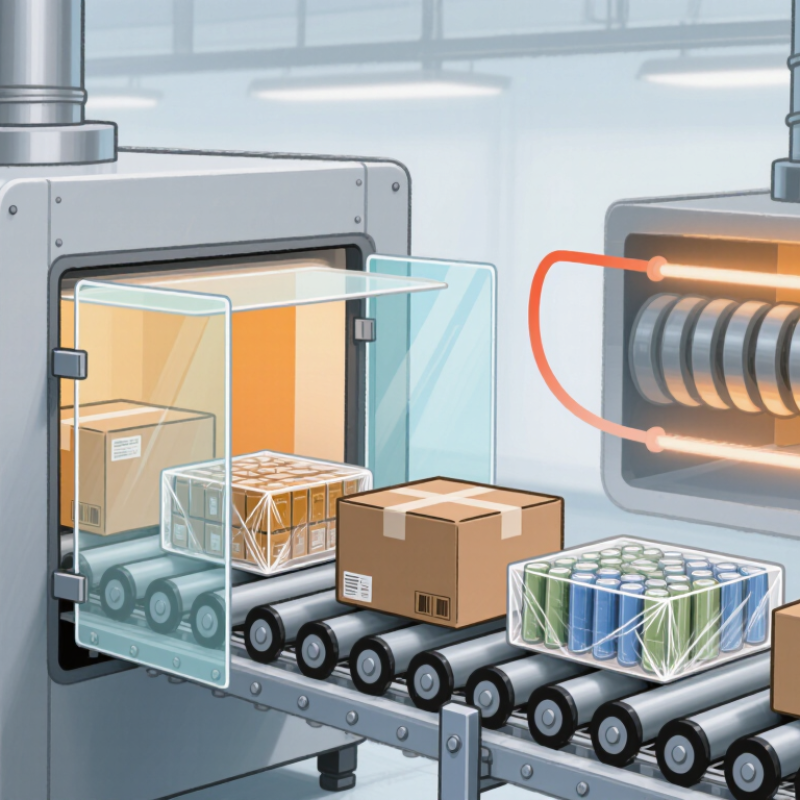
A shrink tunnel uses controlled heat to tighten film around a product or bundled package. It usually follows a sleeve sealer or an automatic wrapping system. Common applications include bottled drinks, food trays, cosmetic containers, household products, and pharmaceutical cartons. Each application needs different heat control and conveyor handling.

Grand View Research valued the global shrink packaging market at USD 9.68 billion in 2023. Its report projects a 6.2% compound annual growth rate from 2024 to 2030. This growth increases pressure on manufacturers to select equipment carefully.

Check film compatibility first. Match tunnel length with package dimensions. Confirm conveyor load capacity. Compare electric consumption. Inspect temperature control accuracy. Review guarding and operator access. Ask for maintenance records and test samples.

Polyolefin film may need different settings from PVC or polyethylene film. Thin film can wrinkle under excessive heat. Heavy bundles may require slower conveyor speeds.

A practical trial often reveals problems that brochures miss. I have seen machines perform well on small cartons but struggle with unstable bottles. That detail matters.

Measure seal quality, shrink consistency, and package appearance during testing. Also verify available floor space, ventilation, spare parts, and staff training. A cheaper tunnel can become expensive when changeovers are slow. Mistakes happen. Good selection leaves room to correct them.

Matching Machine Specifications to Your Product and Packaging Materials

Choosing the best shrink tunnel machine starts with the product, not the machine catalog.

Measure package length, width, height, and spacing between units. A compact carton may need a different tunnel profile than a tall, unstable container. During factory trials, I watch how packages enter, rotate, and leave the conveyor. Small changes can prevent film wrinkles and jams. Leave clearance around the load. Too little space causes contact with tunnel walls.

Match tunnel dimensions to your largest packaged item, not your average one. The opening should provide practical clearance without wasting heat. Product material also matters. Heat-sensitive plastic may deform under aggressive temperatures. Dense cartons may require slower conveyor speeds and longer exposure.

Test several settings with the actual film, including thickness and shrink direction. Polyolefin, PVC, and polyethylene films do not behave identically. A temperature controller alone cannot guarantee even results. Airflow, heater layout, and circulation quality are equally important. Check seal strength, corners, labels, and trapped air after cooling.

Ask operators to run a full production sample. Their feedback often reveals awkward loading heights or difficult controls. Record temperature, speed, energy use, and reject rates. These records support repeatable settings and safer training.

I would not trust a trial using empty boxes. It hides real weight and heat absorption. Even experienced teams can overlook seasonal humidity.

Choose adjustable controls, accessible service panels, and documented safety features. The best specification is the one your product can tolerate every day.

Evaluating Heat Systems, Conveyor Design, and Temperature Controls

Choosing the best shrink tunnel machine starts with its heat system. Electric heating usually offers clean, precise control for smaller production lines. Gas heating can deliver strong, consistent output for higher workloads, but it needs proper ventilation and trained installation. Inspect the heating chamber closely. Cold corners, uneven airflow, or scorched film can reveal poor heat distribution.

Conveyor design affects both package quality and daily productivity. A mesh belt supports airflow around irregular packages. A solid belt may suit stable cartons and reduce small items falling through. Check belt width, load capacity, speed range, and cleaning access. The conveyor should move packages smoothly, without shaking or sudden stops. Small details matter. I once saw an otherwise capable tunnel waste energy because its belt was wider than necessary.

Temperature controls deserve careful testing. Look for independent adjustments for temperature and conveyor speed. Digital sensors, automatic alarms, and data logging improve process reliability. A responsive controller should recover quickly when the door opens or the product load changes. Ask how often sensors require calibration. Readings can drift. Do not trust the display alone; compare it with an external thermometer during commissioning. Operators should test several film types and package sizes before full production. One setting rarely fits everything. That is easy to forget. A well-designed machine makes adjustment simple, visible, and repeatable.

Comparing Production Capacity, Energy Efficiency, and Operating Costs

Choosing the best shrink tunnel machine starts with production reality, not the highest advertised speed. Measure your busiest hour, package dimensions, film type, and sealing pattern. A tunnel rated for 30 packs per minute may slow sharply with bulky cartons. Ask for a live trial using your own products. Watch spacing, seal quality, and rejected packs. Record actual output for at least 30 minutes. Short demonstrations can hide heat buildup and operator delays.

Energy efficiency deserves a closer comparison. Check installed power, average kWh per operating hour, warm-up time, and standby consumption. A lower-wattage heater is not automatically cheaper. Poor airflow may require slower conveyor settings or higher temperatures. Look for insulated panels, adjustable airflow, and independent heating zones. Use a simple energy meter during testing. Compare kWh per 1,000 finished packs, not just the machine’s nameplate rating. This measure is more useful on a busy floor.

Operating cost includes film waste, maintenance, labor, and unplanned stoppages. Examine conveyor belts, heating elements, sensors, and access panels before purchasing. Can one trained operator clean the tunnel safely? Ask for replacement intervals and service response times in writing. I have seen inexpensive equipment become costly after repeated sensor faults. That experience can bias judgment, though. A higher initial price may still fail if capacity is oversized for your line. Build a three-year cost sheet with realistic utilization, electricity rates, spare parts, and downtime. Leave room for seasonal demand, because a perfect calculation rarely survives production.

Checking Safety Features, Maintenance Needs, and Supplier Support

A shrink tunnel machine should protect people before it protects production speed. Check fixed guarding, door interlocks, emergency stops, thermal cutoffs, and conveyor jam detection. Ask the supplier to demonstrate every safety function during a factory acceptance test. Request clear wiring diagrams and risk-assessment documents. Vague answers are warning signs. Operators should receive practical training, not only a manual. The U.S. Occupational Safety and Health Administration emphasizes machine guarding and energy control, so safety evidence deserves careful review.

Maintenance needs affect real operating costs. Inspect heating elements, fans, sensors, belts, and insulation access before purchasing. Ask for recommended service intervals and a complete spare-parts list. Confirm whether technicians can diagnose faults remotely. Deloitte and The Manufacturing Institute projected 3.8 million manufacturing jobs could emerge between 2024 and 2033, with 1.9 million potentially unfilled. Simple maintenance matters when skilled labor is scarce. I still see buyers overvalue tunnel speed. That is an expensive mistake.

Supplier support should include response times, technician availability, warranty limits, software updates, and documented training. Ask how quickly common parts can ship. Request two comparable customer references. PMMI reported U.S. packaging machinery shipments reached 10.2 billion dollars in 2022, showing the scale of this investment. A polished demonstration proves little without service records. I would also test cleaning access with gloves on. It feels minor, but awkward access creates missed maintenance. Perfect promises should invite more questions.

7 Tips for Choosing the Best Shrink Tunnel Machine - Checking Safety Features, Maintenance Needs, and Supplier Support

Tip Evaluation Dimension What to Check Practical Benchmark or Requirement Why It Matters
1 Safety Features Look for emergency-stop controls, guarded hot surfaces, thermal overload protection, abnormal-temperature alarms, and automatic shutdown functions. Safety controls should be accessible, clearly labeled, tested during acceptance, and suitable for the machine’s electrical and operating environment. These features reduce the risk of burns, electrical faults, overheating, and injury during operation or an unexpected stoppage.
2 Package and Film Compatibility Confirm the maximum package dimensions, film type, film thickness, product spacing, and conveyor loading requirements. The tunnel opening and conveyor width should exceed the largest loaded package with sufficient clearance for uniform airflow and safe movement. A correct match helps prevent film tearing, incomplete shrinking, product jams, and inconsistent package appearance.
3 Temperature and Airflow Control Check independent temperature and conveyor-speed controls, adjustable airflow, temperature display accuracy, and the heating method. The machine should allow process settings to be adjusted for different films and products rather than relying on a single fixed temperature or speed. Precise control improves shrink quality and helps limit film distortion, product damage, and unnecessary energy use.
4 Maintenance Requirements Review access to heaters, fans, sensors, conveyor components, filters, and electrical panels. Ask for cleaning and inspection procedures. Routine tasks should be possible without excessive disassembly, and wear parts should have documented inspection or replacement intervals. Easy maintenance reduces downtime, improves heat transfer and airflow, and supports safer long-term operation.
5 Conveyor and Throughput Performance Assess conveyor load capacity, belt or roller construction, speed range, tunnel length, package orientation, and required production rate. Select capacity based on actual packages per minute and product spacing, not only the advertised maximum speed. Realistic capacity calculations prevent bottlenecks and help maintain consistent exposure time inside the heated zone.
6 Energy and Installation Needs Verify rated voltage, phase, electrical load, ventilation requirements, available floor space, heat dissipation, and noise conditions. The facility should confirm electrical capacity and provide adequate clearance for operation, cleaning, ventilation, and emergency access. Correct installation supports stable performance, reduces overheating risk, and avoids unexpected electrical or facility modifications.
7 Supplier Documentation and Support Request manuals, wiring diagrams, spare-parts lists, training details, warranty terms, response procedures, and commissioning support. Support terms should define response times, parts availability, troubleshooting responsibility, and the scope of installation or operator training. Reliable documentation and technical support shorten downtime and make operation, maintenance, and future servicing more predictable.
Selection note: Final suitability should be confirmed through a product trial using the actual package, shrink film, operating speed, and electrical conditions.

Shopping cart