
Global sourcing decisions often begin with a simple question: why choose a Drawstring Trash Bag? The answer reaches beyond price. Buyers need dependable performance, stable supply, and packaging that suits different markets. A well-designed drawstring closure can make daily waste handling faster and cleaner. It also gives users a practical grip when removing full bags from bins.
Experienced sourcing teams examine the details. They review film thickness, bag dimensions, tensile strength, leak resistance, and seal quality. Small differences matter. A thin bag may save money, yet tear beside a sharp container. A weak drawstring may fail during transport. Reliable suppliers should provide clear specifications, production samples, quality records, and consistent batch inspections. Factory visits and independent testing can add useful evidence, especially for large-volume orders. Compliance claims must be checked against the destination market’s current requirements. Assumptions are risky.
Material selection deserves careful attention. Recycled content, resin quality, color consistency, and odor control can affect customer acceptance. Packaging should protect the bags from moisture while reducing unnecessary space and materials. Buyers may also compare carton strength, pallet efficiency, lead times, and communication during production. These details influence the real landed cost.
No product is perfect. Even a strong bag can be misused or overloaded. That point should remain visible in supplier discussions and user instructions. A careful sourcing process connects performance with evidence, not attractive promises. For global buyers, the right Drawstring Trash Bag is a balance of usability, verified quality, responsible production, and dependable delivery. That balance may take more work than expected, but it can prevent expensive surprises later.
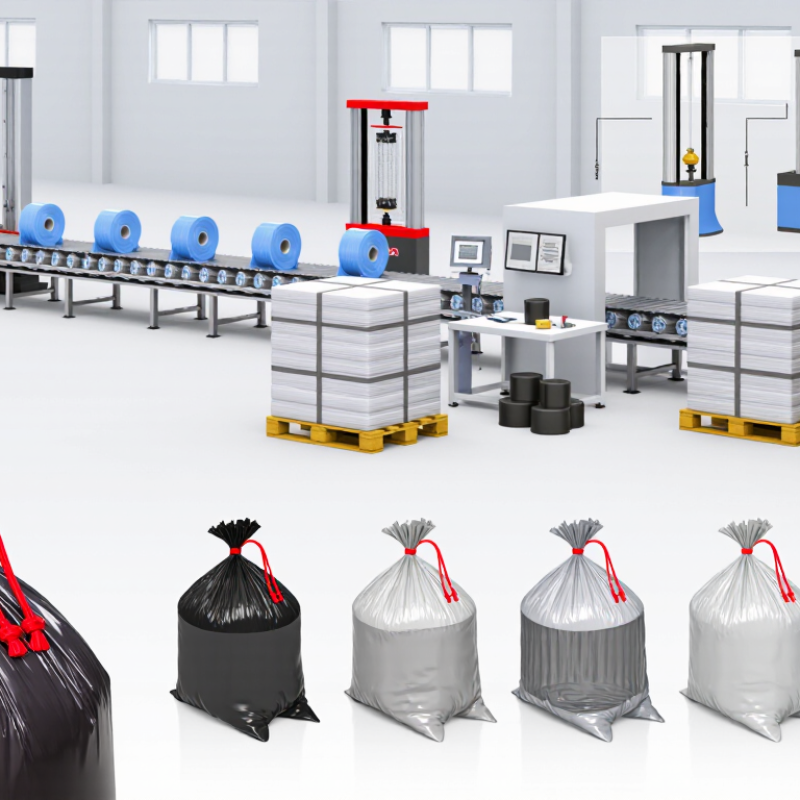
A drawstring trash bag is a flexible waste container with a cord-like closure built into its rim. Pulling the two handles gathers the opening tightly, helping users lift, tie, and carry the filled bag with less contact. Unlike flat-top bags, it does not require separate knots or extra ties. This small detail matters in kitchens, offices, hotels, and cleaning operations where speed and hygiene affect daily work.
Most drawstring bags use polyethylene film, selected for its balance of flexibility, tear resistance, and moisture protection. Thickness should match the intended waste, because a thin bag may suit light office paper but fail with wet food scraps.
During sourcing, buyers should examine sealing quality, handle strength, dimensions, roll winding, and packaging consistency. A practical test is simple: fill the bag gradually, lift it from the drawstrings, and inspect the bottom seal. It can reveal weaknesses that product descriptions miss.
The design is convenient, not perfect. Overloading may stretch the rim or break the cord channel. Very cold storage can also make some films less flexible. I have found that actual use conditions often matter more than attractive samples. Clear specifications and repeated inspections reduce surprises, although they cannot remove every risk. Waste habits differ between locations, so one size rarely fits every facility.

A drawstring trash bag uses a simple closing system. Its top edge contains a reinforced channel with one or two flexible cords. When pulled, the cords gather the opening evenly. The user can then tie the loops, lift the bag, or secure it inside a bin. This design reduces direct contact with waste. It also supports faster handling in kitchens, offices, hotels, and healthcare-adjacent areas.
The mechanism depends on correct proportions. A short drawstring may leave the opening loose. An undersized bag can pull away from the rim. During sourcing, buyers should check film thickness, seam strength, cord length, and usable capacity. ASTM D1709 dart-impact testing and ASTM D1922 tear testing can help compare film performance. These tests do not replace real loading trials. A bag may pass laboratory testing yet fail when sharp packaging presses against one seam.
The scale of waste makes closure reliability important. The U.S. Environmental Protection Agency reported 292.4 million tons of municipal solid waste in 2018. Plastics represented about 35.7 million tons of that total. The United Nations Environment Programme also reported that global plastic waste could nearly triple by 2060 without stronger action. These figures do not prove that drawstring bags solve waste problems. They show why controlled use, suitable sizing, and responsible material selection matter. In practical inspections, fill a sample bag to its rated volume, lift it briefly, and check the gathered channel. Small failures often appear there.
Drawstring trash bags offer practical benefits for global sourcing, especially where labor, storage, and transport costs matter. Their built-in closure helps workers tie, carry, and remove full bags without searching for separate ties. That small detail can reduce handling time in hotels, offices, and facility operations. It can also improve packaging efficiency because each bag arrives ready for use.
The World Bank’s What a Waste 2.0 report estimates that global municipal solid waste reached 2.01 billion tonnes in 2016. It may rise to 3.4 billion tonnes by 2050. This pressure makes dependable waste-handling products increasingly important. For buyers, consistent roll dimensions, tear resistance, odor control, and carton utilization deserve close attention. The United Nations Environment Programme reported approximately 2.3 billion tonnes of municipal waste in 2023. Sourcing decisions now need both operational and environmental awareness.
A drawstring bag is not automatically the better choice. A thinner film may reduce freight weight, yet it can split under wet food waste or sharp packaging. That creates hidden labor and replacement costs. Buyers should request tensile, puncture, leak, and closure testing before approving samples. Recycled-content options may support procurement goals, but quality can vary between factories. I have found that clear specifications outperform attractive samples. Cost per carton is only part of the decision.
Drawstring trash bags support global sourcing through easy closure, consistent handling, efficient storage, and flexible material options. The procurement priority scores below use a 0–100 scale to compare practical sourcing considerations; higher scores indicate greater value for international buyers.
Material choice affects strength, odor control, storage life, and total shipping cost. Low-density polyethylene offers flexibility for everyday household waste. High-density polyethylene feels thinner but can resist punctures well. Recycled content may reduce virgin plastic use, although color and consistency can vary between production batches. Compostable materials suit specific disposal systems, not every location. Check local requirements before ordering.
Size should match the bin, not just the catalog description. Measure the opening, height, and usable depth. A 30-liter bag needs enough rim allowance for tying. For food-service areas, thicker film can handle wet waste more reliably. However, thicker is not always better. Our sourcing trials once used excessive gauge, increasing carton weight without improving performance. That mistake changed our approval checklist.
Customization can include bag dimensions, film thickness, drawstring length, color, scent-free formulation, packaging, and carton marks. Clear specifications prevent costly misunderstandings. Ask suppliers for material declarations, production samples, seal-strength results, and batch consistency records. A practical test uses the actual bin, common waste, and a full tying cycle. Printing also needs review, especially when small text may blur on recycled film. Small details matter. A useful specification should remain clear to factory teams, inspectors, and warehouse staff.
Drawstring trash bags offer practical handling for homes, offices, and commercial facilities. Their integrated ties help close full bags quickly and reduce direct contact with waste. For global sourcing, however, convenience should not replace careful supplier evaluation. A low price can hide weak film, inconsistent sizing, or poor packaging.
Ask suppliers for clear specifications, including bag dimensions, material type, thickness, load capacity, drawstring strength, and carton details. Request samples from different production batches. Test them with wet waste, sharp packaging edges, and repeated lifting. I once focused too heavily on unit price. The bags looked acceptable, but the ties stretched during handling. That mistake changed how I compare suppliers.
Review factory experience, quality procedures, production capacity, and export records. A video call can reveal storage conditions, equipment, and labeling practices, although it cannot replace an independent inspection. Confirm product documents, packing lists, commercial invoices, and shipping marks before dispatch. Check the destination country’s packaging, waste-handling, and import requirements with qualified local professionals. Keep one approved sample beside the purchase order.
Import planning also needs realistic timing. Add production, inspection, port handling, customs clearance, and possible delays to the schedule. Use agreed trade terms and define responsibility for damaged cartons. Inspect random cartons after arrival. Record failures with photos and batch numbers. Not every problem comes from the supplier; unclear specifications can cause expensive misunderstandings. Better sourcing comes from evidence, repeat testing, and a willingness to revise your own process.
Headquarters
2980 Scott St, Vista, CA 92081
Phone: (760) 734-4177
Fax: (760) 734-4188
Open: 8:00 am – 4:30 pm
Texas
8051 Jetstar Dr #175 Irving, TX 75063
Phone: (972) 915-6888
Fax: (972) 915-6999
Open: 8:00 am – 4:30 pm
Florida
14231 Jetport Loop. #1 Fort Myers, FL 33913
Phone: (239) 225-4020
Fax: (239) 225-4024
Open: 8:00 am – 4:30 pm